



09 Apr GENESIS Biomed leads the European PHEMS Business Hackathon in Barcelona to shape the future of the Paediatric Health Data Space
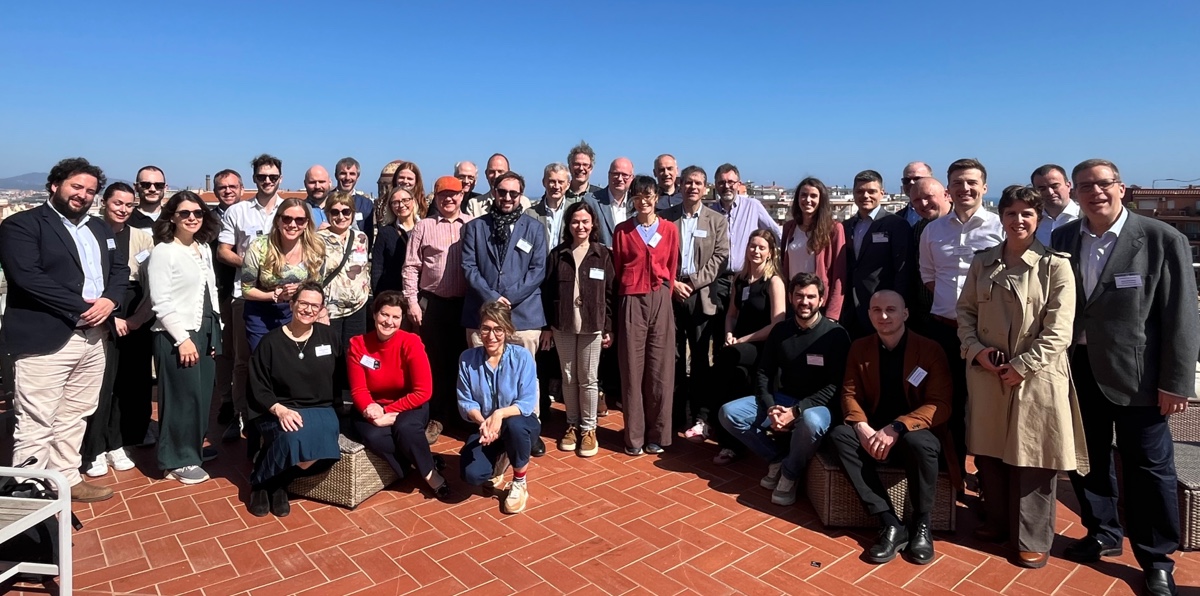
• More than 50 stakeholders gathered in Barcelona in an international Hackathon organized and coordinated by GENESIS Biomed within the PHEMS project.
• The event brought together experts from hospitals, research organizations, industry and innovation ecosystems to co-create sustainable service models for the Paediatric Health Data Space (PHDS).
• Through three thematic working tracks, participants validated value propositions, identified early adopters and explored long-term sustainability for PHDS services.
• The hackathon was organized in close collaboration with Helsinki University Hospital (HUS), the European Children’s Hospitals Organisation (ECHO) and Institut de Recerca Sant Joan de Déu as key partners of the Horizon Europe PHEMS project.
PHEMS is a Horizon Europe project that has been building the foundations of the Paediatric Health Data Space (PHDS), a secure, federated and interoperable ecosystem designed to enable the sharing of paediatric health data across Europe. Aligned with the vision of the European Health Data Space (EHDS), the initiative has aimed to facilitate the compliant use of health data for research, innovation and policymaking. Through this work, PHEMS has sought to support the development of new therapies for children, improve the evaluation of paediatric care outcomes through cross-border hospital benchmarking, and foster the creation of new technological solutions in child health.
The PHEMS consortium is made up of a multidisciplinary group of partners from across Europe, including Helsinki University Hospital, Erasmus University Medical Center Rotterdam, Great Ormond Street Hospital for Children, University College London, Sant Joan de Déu Barcelona Children’s Hospital, Sant Joan de Déu Research Foundation, Meyer Children’s Hospital IRCCS, VEIL.AI, Tietoevry Finland, Children’s Clinical University Hospital of Latvia, the European Children’s Hospitals Organisation, GENESIS Biomed, and Aridhia Informatics Limited, and The Hyve.
The PHEMS Business Hackathon was organized as a collaborative forum to explore exploitation models and long-term sustainability strategies for the future PHDS.
The PHEMS Business Hackathon took place at the Barcelona Health Hub in Barcelona, Spain, bringing together more than 50 participants for an intensive one-day event structured around plenary sessions, parallel working groups across three different tracks, final presentations delivered by a representative from each track, and a concluding discussion. The Hackathon began at 9:30 a.m. with an opening plenary session featuring Eva Rosell, CEO of Barcelona Health Hub, Jari Petäjä, Director of the New Children’s Hospital at HUS (Helsinki University Hospital), Rubén Díaz, Executive Director of ECHO, and Josep Lluís Falcó, CEO of GENESIS Biomed, who introduced Barcelona Health Hub, PHEMS, ECHO and the Business Hackathon, respectively.
Following the opening session, participants were divided into three working groups:
- Track 1 (Benchmarking and Clinical Performance Services): focused on designing service concepts and business models that would enable hospitals to benefit from benchmarking tools, outcome comparison and data-driven quality improvement, building on the PHDS infrastructure.
- Track 2 (Data Services for Scientific Research): concentrated on developing sustainable service models that would allow researchers to access and analyse real-world health data through a combination of synthetic data, federated learning environments and (pseudo-)anonymised data, in line with GDPR requirements and the principles of the EHDS.
- Track 3 (Industry-Facing Services & Monetization Models): was dedicated to defining service offerings and sustainable business models that would make the PHDS valuable and attractive for industry users, while ensuring alignment with public health objectives, data governance standards and ethical principles.
During these sessions, participants discussed key challenges and opportunities related to the future PHDS and worked collaboratively on a Business Model Canvas designed to structure the discussion around the value proposition, target users, potential services, sustainability pathways and exploitation opportunities of the initiative. This methodology provided a practical framework to help participants identify priorities, validate assumptions and generate concrete ideas for the long-term implementation and viability of the PHDS.
The main objective of the hackathon was to gather external input on the business hypotheses associated with the services promoted by PHEMS and their continuity under the future PHDS. More specifically, the exercise was designed to test business models in realistic scenarios, assess stakeholders’ willingness to pay for different services, simulate service delivery and payment schemes, and identify opportunities for scalability and long-term sustainability. In addition, the event aimed to help define the role and requirements of future PHDS Access Providers. Secondary objectives included identifying early adopters, refining service packages and data products, and fostering dialogue among hospitals, data scientists, companies and other key stakeholders in the ecosystem.
After the lunch break, participants reconvened for a plenary session in which representatives from each track presented the main ideas and conclusions arising from the morning working sessions. The representative for Track 1 was Michael Peterlunger, for Track 2 Antonio Urba, and for Track 3 Jasmine Kincaide. The session also featured a Question and Answers and a general discussion involving all participants, creating an opportunity to share perspectives and collectively reflect on the main themes addressed throughout the Hackathon. The plenary session was led by Pekka Kahri, Project Coordinator of PHEMS.
The event came to a close with a closing session and awards ceremony led by Arnau Valls, Innovation Manager at Sant Joan de Déu Barcelona Children’s Hospital. As part of the ceremony, several awards were presented in recognition of the participants’ contributions, including Best Canvas to Track 3 (industry) , Best Speaker to Antonio Urba and Best Idea to Rafał Bartczuk.
The PHEMS Business Hackathon represented a significant milestone in the project’s efforts to advance the future PHDS. By promoting dialogue among hospitals, researchers, industry representatives and innovation stakeholders, the event contributed valuable insights into the design of sustainable services and reinforced a shared European commitment to unlocking the potential of paediatric health data for research, innovation and better healthcare outcomes.